
Reefer dispatch for freight where temperature is everything.
Meat, produce and medicines don’t forgive mistakes. We book reefer loads with set points, appointment times and handling requirements confirmed before your truck rolls.
- Length
- 48–53 ft
- Doors
- Mostly swing doors
- Unit
- Front-mounted refrigeration
- Typical cargo
- Around 45,000 lbs
- Key gear
- Straps, e-track, load bars
What makes reefer freight different
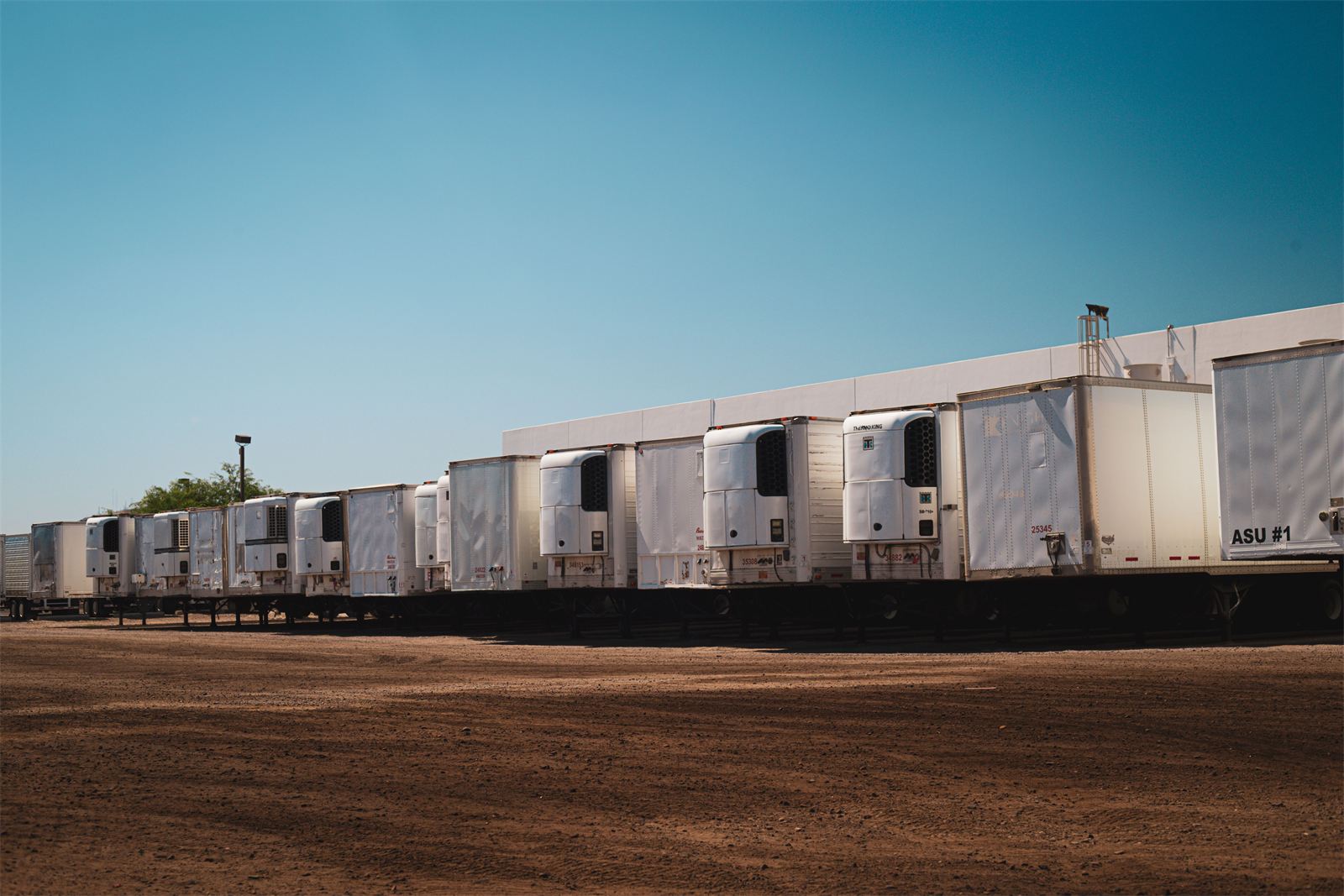
A reefer is a refrigerated trailer with a cooling unit mounted on the front wall. It looks much like a dry van — typically 48 to 53 feet with mostly swing doors — but it carries freight that must stay within a specific temperature range from pickup to delivery.
The rest of the equipment is similar to a dry van, including straps and e-track for securing loads, and cargo weight is commonly planned around 45,000 lbs. What changes is the responsibility. A reefer driver must pre-cool the trailer, confirm the set point on the bill of lading, run the unit as required, and monitor temperatures the entire trip.
Reefer freight often comes with tighter appointment windows and more detailed shipper instructions. Groundbreakers Dispatch confirms every requirement before booking so there are no surprises at the dock — and no rejected loads at delivery.
Freight applications
Temperature-controlled commodities we book.
Temperature coordination, step by step
Confirm the set point
We get the required temperature and whether the unit runs continuous or start-stop.
Pre-cool the trailer
The driver pre-cools before arriving so loading isn’t delayed.
Verify at pickup
The set point on the BOL is checked against the rate confirmation.
Monitor in transit
The driver monitors the unit and fuel; issues are reported immediately.
Dispatch considerations for reefer
- Unit fuel and maintenanceReefer units burn fuel and need service, which affects cost per mile.
- Appointment precisionReceivers of perishable goods often have strict windows.
- Waiting timeProduce sheds and cold storage can mean long waits; detention terms matter.
- Claims riskTemperature problems can lead to rejected loads, so documentation is key.
- Seasonal lanesProduce seasons shift freight across regions throughout the year.
Frequently asked questions
Can a reefer haul dry freight?
Yes. Reefers can run dry freight with the unit off, which helps reduce deadhead between temperature-controlled loads.
What’s the difference between continuous and cycle mode?
Continuous runs the unit nonstop; start-stop (cycle) turns it on and off to hold temperature. Shippers specify which they require.
Do reefer loads pay more?
Reefer freight often pays differently than dry van because of added cost and responsibility, but rates depend on the market. Compare scenarios in our calculator.
Get Started with Groundbreakers Dispatch
Let’s discuss your dispatch needs.
Tell us about your equipment, your preferred lanes and where you want your business to go. Our team will reach out to talk it through — no pressure and no obligation.